
A–I
Section I of Your Personal Art Glossary

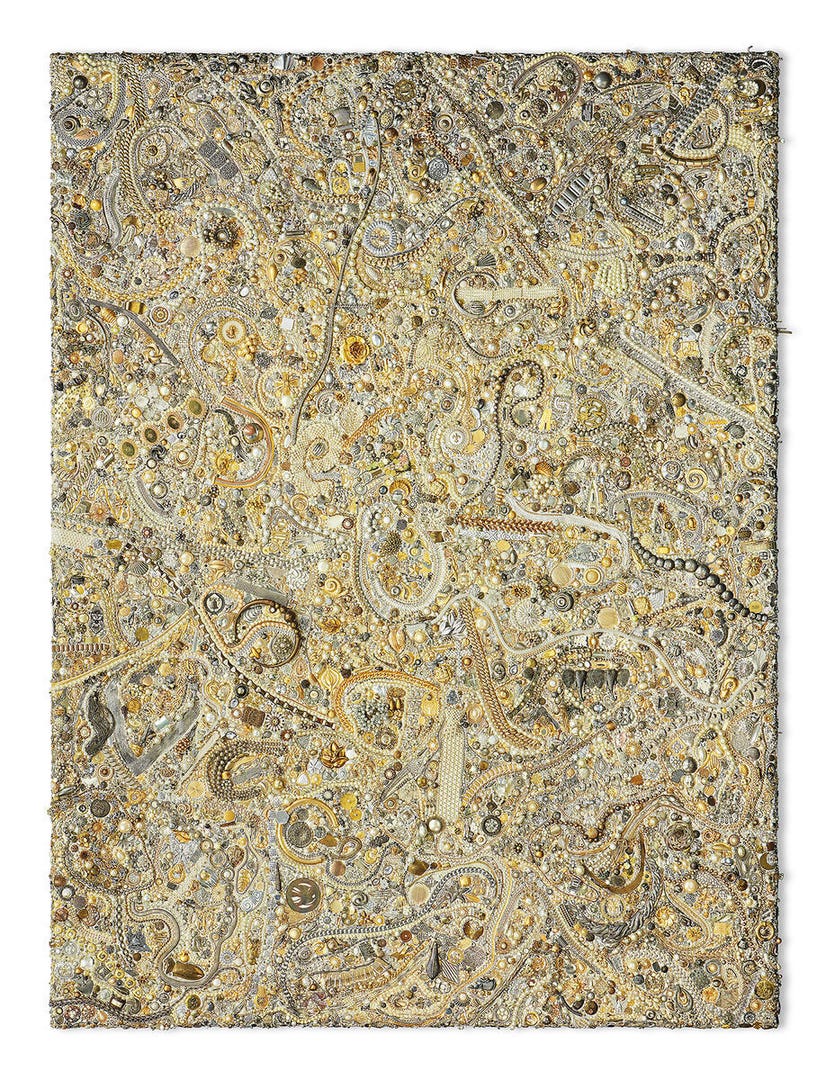
Assemblage: An art technique where different pre-existing objects or materials are brought together to create a new work. These pieces can be found, everyday, or industrial objects—sometimes including metal, wood, fabric, or paper—combined into a single composition. Assemblage became especially prominent in early 20th-century avant-garde movements in Europe and later became a key practice in modern and contemporary art.
Ben-Day Dots: A mechanical printing technique developed in the late 19th century by illustrator and printer Benjamin Henry Day Jr. It uses small colored dots—typically cyan, magenta, yellow, and black—arranged in patterns to create shading, tones, and colors in an image.
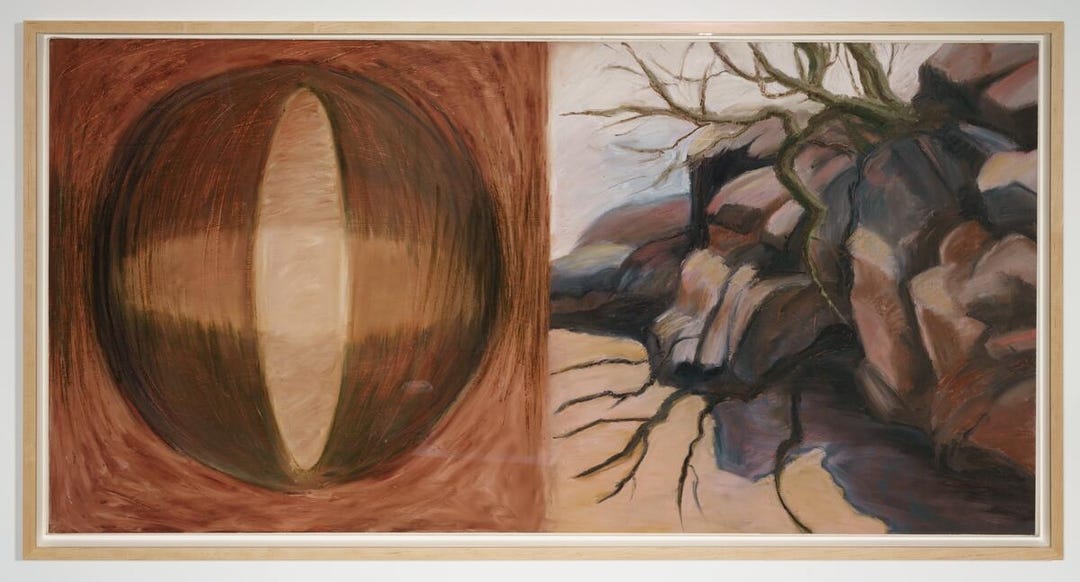
Diptych: A single artwork split into two connected panels. They’re meant to be seen as a pair—often speaking to each other through imagery, theme, or contrast.
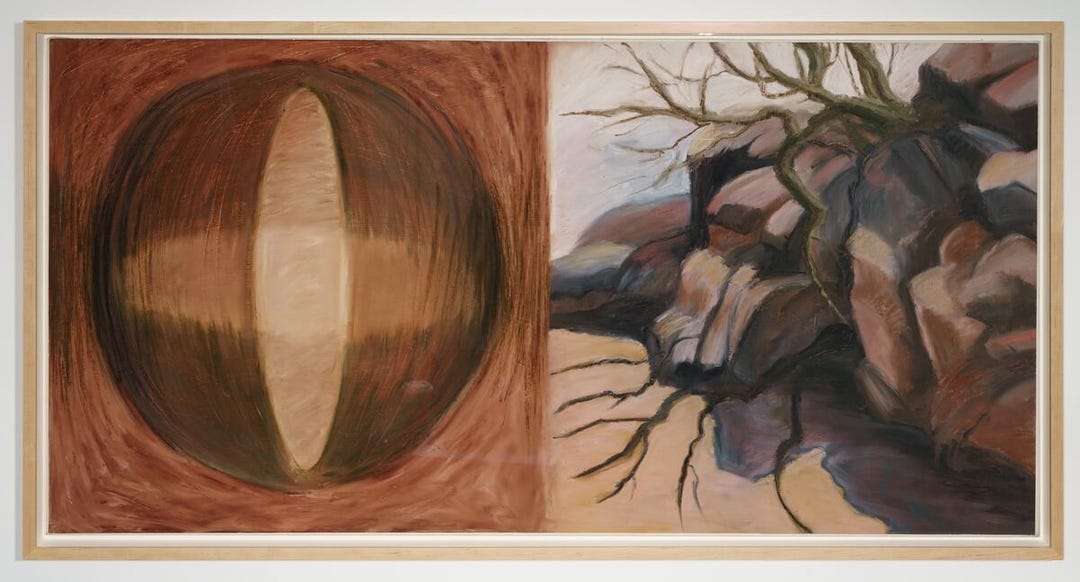
Kay WalkingStick (b. 1935), “Spirit Center II,” 1992, oil stick on paper mounted to canvas, 30 x 60 in. Art Bridges. Drypoint: A printmaking technique where an image is scratched directly into a metal plate—often copper—using a sharp needle. The scratched lines hold ink and produce rich, soft, velvety marks when printed.
Editions: A group of identical prints made from the same plate or surface. Editions can be limited or unlimited. In a limited edition, each print is numbered (e.g., 1/100, 2/100), and additional prints—such as artist’s proofs or printer’s proofs—may be made but are kept separate from the numbered set.
Embossing: A printing technique where a design is pressed into paper without ink, creating raised or indented patterns you can see and feel.
Encaustic: A painting technique that uses heated beeswax as a binder for pigment. Each layer is fused with heat, creating a smooth, durable surface with a luminous quality. Artists often mix the wax with damar resin (a natural tree sap) to harden the finish and improve stability.
Fresco: A painting technique where pigment is applied directly onto fresh, wet plaster. As the plaster dries, the paint becomes permanently bonded to the wall.
Glaze: A thin, transparent or translucent layer of paint applied over a dried layer to adjust its color or tone. Glazes are made with a high proportion of binder mixed with a small amount of pigment.
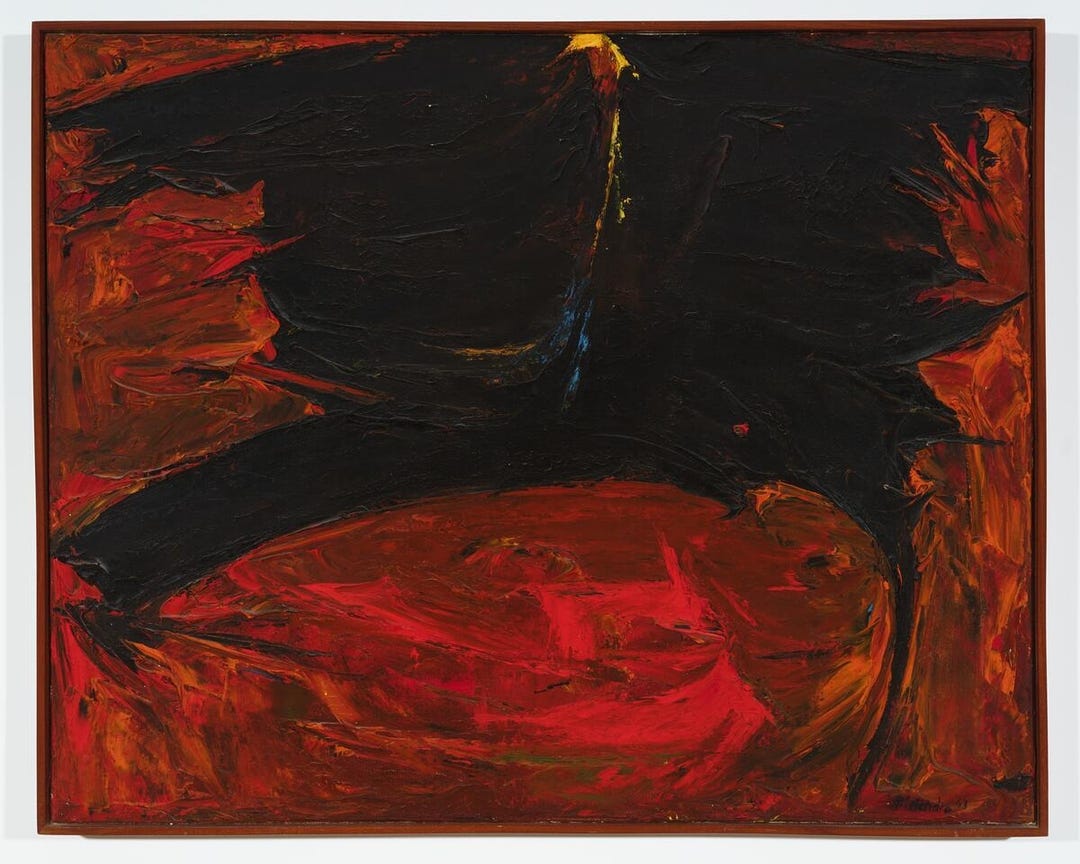
Impasto: A painting technique where paint is applied in thick layers so that texture and brush or palette knife marks remain visible. Often used with oil paint, impasto gives the surface a physical, almost sculptural quality, though acrylic can also be used.
Bonus:
Install (installation process): The act of setting up artwork in an exhibition space. This includes hanging, placing, or arranging works before an exhibition opens.
VS
Installation (artwork type): A type of artwork designed to transform or occupy a space. Installations can include one or many components and often engage the viewer physically or spatially—sometimes in immersive or interactive ways. Unlike sculpture, installations are usually experienced as an environment rather than a single object.